


Canada’s Gender Pension Gap
Why women with more education still retire with less income
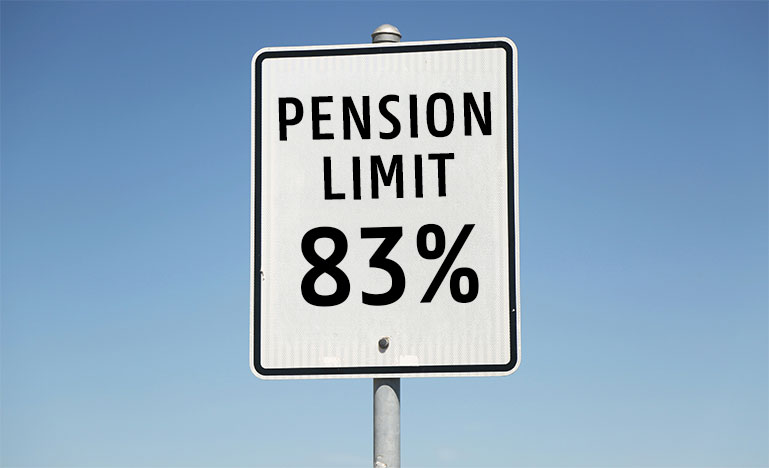
When I entered law school in 1991, I was surprised to learn that mine was the first University of Victoria Faculty of Law class in which women outnumbered men. I thought parity had finally arrived. Yet while Canadian women now surpass men in higher education, they still earn less and retire with less income. Women receive about 83 cents in pension income for every dollar received by men, a gap that has persisted—and even widened at times—since the 1970s. The result is a familiar gap for women retiring today—one their mothers and grandmothers would recognize.
This is a structural problem, not simply a savings problem. The analysis that follows describes broad structural patterns, not individual experience, and it excludes the contribution that personal savings and real assets may make to retirement income.
The pension income gap is straightforward: although young women now enter the workforce as educated and credentialled as men, pension income depends on pay and service. As Canada Pension Plan and workplace pensions are calculated based on salary and service metrics, gender differences in earnings and work patterns translate into lower pension income for women.
- In Canada, women increasingly earn higher incomes, but most still earn less than men, including in higher wage brackets. The gender wage gap reflects both lower hourly wages and lower annual earnings, and although it has narrowed, it persists across industries and occupations. Research shows that a segment of the gap can be explained by differences in education, experience, hours worked, occupation, industry, unionization, public versus private sector employment, organizational size, age, marital status, and whether employees have children. However, a significant portion of the gender wage gap (>60%) remains unexplained after accounting for these factors.
- On average, women experience career interruptions more often than men, and those interruptions tend to add up to longer periods away from paid work, often related to childbirth and child rearing. A related earning penalty may persist for years after a woman returns to work. Men who become fathers typically do not experience a comparable earnings penalty.
- Women concentrate disproportionately in part-time roles, often as unpaid caregiving work falls disproportionately to women. In 2023, almost 24% of working women worked part-time, compared to 13% of men. Part-time workers typically earn lower hourly rates, accumulate fewer hours of pensionable service, and—crucially—may be excluded from workplace pension plan eligibility entirely.
Taken together, these patterns create a cumulative disadvantage. Lower income, caregiving interruptions, and more part-time employment lead to lower pension contributions and smaller savings, which in turn produce less income in later life. Older women also need more pension savings, because they live longer and are more likely to live below the low-income threshold as their smaller savings need to last longer.
The same pattern—wage gaps, caregiving interruptions, and part-time penalties—appears in the professions. Although gender pay equity is recognized as an issue in the Canadian legal profession, there is little publicly available quantitative evidence.
Canadians have begun to recognize this reality. As noted earlier, Canada Pension Plan and workplace pensions are calculated based on salary and service metrics, so the challenge to narrowing the pension gap is to narrow both the pensionable service and pay gaps. That important work has started:
- The Canada Pension Plan was enhanced in 2019. While the base CPP component includes a child-rearing drop-out provision, the enhanced CPP component has a child-rearing drop-in provision. Base CPP is the original benefit, which provides retirement income based on a person’s contributions and earnings over their working life; it removes low-earning caregiving years from the pension calculation. In contrast, enhanced CPP is the additional benefit introduced gradually beginning in 2019, funded by higher contributions and designed to replace a larger share of pre-retirement earnings; it will provide credits to women (and men) who take time off work to care for their children under the age of seven. While not a complete solution, the CPP changes are pragmatic and will help narrow the pension gap.
- Consistent with its prior jurisprudence, the Supreme Court of Canada (SCC) in 2020 found that neutral pension rules can be discriminatory when they have a disproportionate adverse impact on women. In Fraser, the SCC considered whether RCMP pension rules that permitted full pension credit for certain types of leave, but not for job-sharing arrangements, had a discriminatory effect on women. The claimants, all female RCMP members, participated in job-sharing to meet childcare responsibilities and were required to buy back lost pension credit, unlike members on other forms of leave. The Court held that although the pension rules were neutral on their face, they disproportionately disadvantaged women because of their greater caregiving responsibilities, amounting to adverse-effects discrimination contrary to section 15 of the Canadian Charter of Rights and Freedoms.
Following Fraser, a number of pension plans are examining how plan design may affect gender outcomes. This work includes reviewing job-sharing, part-time, and parental leave provisions to understand whether neutral plan rules have a different effect on women plan members and what opportunities there are to improve outcomes. For example, expanding access to plan enrolment for part-time employees may help narrow the gender pension gap. While Fraser may not be applicable in the private sector, the broader governance question is universal: how can plan fiduciaries and sponsors identify and address equity issues within their sphere?
- British Columbia’s 2023 Pay Transparency Act requires salary ranges in job postings and phased pay transparency reports from employers with employees in B.C., excluding federally-regulated employers. Reporting was phased in by employer size, beginning with the BC Public Service Agency and six B.C. Crown corporations. The legislation aims to help employers identify and address pay gaps. It appears to be having an impact, as the gender pay gap has narrowed by almost four percent since its introduction. This year, 8,500 employers with at least 50 employees in B.C. will be required to post such reports.
The federal government has adopted similar legislation, and Ontario and some of the Atlantic Provinces have as well. Adding salary ranges in job postings and requiring employer pay gap reports could be extended to all Canadian provinces and territories, shining a light on salaries and encouraging employers to reconcile their own gender pay gaps. Such practices may also shift cultural norms and expectations towards greater equity. The B.C. model provides a tested legislative template. If we can narrow the gender pay gap, we will indirectly narrow the gender pension gap too.
My daughter is working on her undergraduate degree and is considering law school. I am hopeful that Canada can and will continue to modernize our employment and pension income systems to offer her generation greater fairness and security and reflect the real architecture of women’s working lives.
I would be remiss not to note other non-structural headwinds impacting women’s retirement income adequacy. These include:
- Decision-making regarding paid employment and unpaid caregiving at the household level can exacerbate the gender pay and pension gap, which leaves women more exposed to poverty after divorce or widowhood, especially later in life.
- Products and services marketed uniquely to women routinely carry price premiums, effectively eroding the discretionary income women have available for savings and investment.
- While women are "risk aware" (e.g., they are more likely to own critical illness insurance), there is a persistent gender confidence gap that exists with respect to investing, resulting in women participating at lower rates in capital markets.
These issues require different solutions, including financial education and literacy.
The gender pay and pension gap is worse for women with disabilities and racialized, Indigenous, transgender and self-employed women.
In addition, there is a broader employment-based pension coverage gap in Canada, and it deserves attention too: 37.7% of Canadian workers have access to a workplace pension. While women employees are more likely to have coverage than men, this is due to the decline in coverage in the private sector and the concentration of women workers in the public sector. Approximately 1 in 5 private sector workers has access to an employment-based pension plan, compared to more than 4 in 5 public sector workers. Lack of pension coverage is a major issue in Canada. Still, while women are more likely to participate in pension plans, they retire with less funds than men. If 100% of employees had access to an employment-based pension plan, even more women would have access to pension coverage, but we would still have a gender pension gap—for all the reasons noted above.